





Investing can seem intimidating, especially in case you’re new to the arena of finance. With such a lot of alternatives to be had, how do you know where to start? Enter index finances—a simple, low-cost, and effective way to develop your wealth over time. Whether you’re saving for retirement, a down payment on a residence, or simply looking to construct long-term wealth, index budgeting is a powerful tool to remember.
In this complete manual, we’ll walk you via the entirety you want to realize approximately the way to put money into index price range. From knowledge what they’re to selecting the right ones in your portfolio, we’ve were given you covered. Let’s dive in!
What Are Index Funds?
Index finances are a sort of mutual fund or trade-traded fund (ETF) designed to track the performance of a specific marketplace index, which includes the S&P 500, NASDAQ, or Dow Jones Industrial Average. Unlike actively controlled funds, in which a fund supervisor choices character shares, index finances passively comply with the index they’re tied to. This approach decreases expenses, less turnover, and traditionally aggressive returns.
Why Invest in Index Funds?
- Low Costs: Index budgets have lower expense ratios as compared to actively controlled price range due to the fact they don’t require a crew of analysts to pick stocks.
- Diversification: By making an investment in an index fund, you’re basically buying a small piece of hundreds or maybe lots of organizations, reducing your chance.
- Consistent Performance: Over the long term, index finances regularly outperform actively controlled funds. According to a 2023 study through S&P Dow Jones Indices, 85% of huge-cap fund managers underperformed the S&P 500 over a ten-year length.
- Simplicity: Index funds are smooth to apprehend and require minimum upkeep, making them best for beginner traders.
How to Get Started with Index Fund Investing
Ready to start making an investment in index funds? Follow these steps to set yourself up for fulfillment.
1. Define Your Financial Goals
Before making an investment, it’s critical to comprehend why you’re investing. Are you saving for retirement, a primary purchase, or in reality building wealth? Your goals will determine your funding strategy, such as how a great deal you make investments and your time horizon.
- Short-time period desires: Consider low-risk investments or financial savings accounts.
- Long-time period goals: Index finances are an tremendous preference because of their increase potential through the years.
2. Choose the Right Brokerage Account
To put money into index budget, you’ll want a brokerage account. Look for a platform that offers:
- Low prices: Many online agents now offer fee-free trading.
- A huge choice of index budget: Ensure the platform gives get admission to to the funds you’re interested by.
- User-pleasant interface: Especially important for novices.
Popular alternatives include Vanguard, Fidelity, Charles Schwab, and Robinhood.
3. Decide Between Mutual Funds and ETFs
Index funds are available in two primary bureaucracies: mutual budget and ETFs. Here’s a brief comparison:
Feature
Mutual Funds
ETFs
Trading
Bought/bought at give up of day
Traded like stocks in the course of the day
Minimum Investment
Often higher (e.g., $3,000)
Lower (e.g., rate of one proportion)
Expense Ratios
Slightly higher
Typically, lower
For most beginners, ETFs are a first rate start line because of their flexibility and decrease fees.
4. Research and Select Your Index Funds
Not all index budget is created identical. Here’s the way to pick out the proper ones:
Look for large marketplace exposure: Funds that song predominant indices just like the S&P 500 or general inventory market are a solid choice.
Check cost ratios: Lower is higher. Aim for budget with expense ratios under zero.10%.
Consider your danger tolerance: If you’re threat-averse, remember including bond index funds on your portfolio.
Examples of Popular Index Funds:
Vanguard S&P 500 ETF (VOO): Tracks the S&P 500 with a fee ratio of just 0.03%.
Schwab Total Stock Market Index Fund (SWTSX): Offers publicity to the entire U.S. Stock marketplace.
iShares Core MSCI Emerging Markets ETF (IEMG): For global diversification.
5. Start Investing
Once you’ve chosen your funds, it’s time to make investments. Here’s how:
Set a finance: Decide how tons you could have enough money to invest often.
Automate your investments: Many structures can help you set up computerized contributions.
Stay steady: Investing often, even in small amounts, can lead to huge increase over the years way to compound interest.
Tips for Successful Index Fund Investing
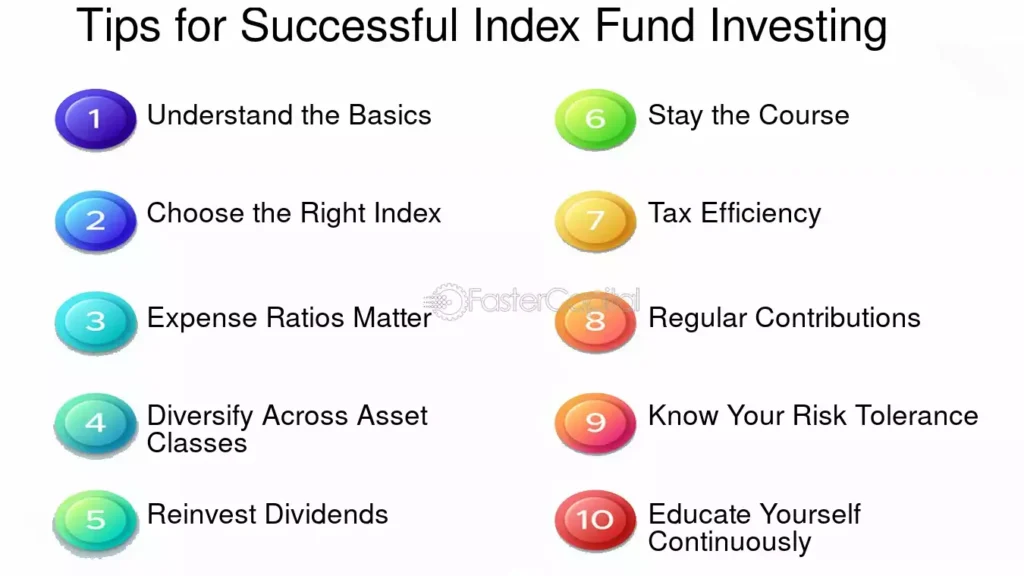
To maximize your returns and minimize dangers, hold these guidelines in mind:
1. Diversify Your Portfolio
Don’t positioned all your eggs in a single basket. Consider a mixture of:
U.S. Inventory index budget
International index funds
Bond index finances
2. Keep an Eye on Fees
Even small expenses can consume into your returns through the years. Stick to low-value index finances and keep away from useless trading.
3. Stay the Course
Index fund investing is a protracted-term method. Avoid the temptation to promote for the duration of market downturns. Historically, markets have usually recovered and grown through the years.
4. Rebalance Periodically
Over time, your portfolio’s allocation may also shift. Rebalancing ensures you stay aligned along with your hazard tolerance and dreams.
Common Mistakes to Avoid
Even with a straightforward approach like index fund making an investment, errors can show up. Here’s what to observe out for:
- Chasing performance: Don’t leap right into a fund simply as it had a very good year. Stick on your plan.
- Overcomplicating your portfolio: You don’t want dozens of finances to be different.
- Ignoring taxes: Be aware of tax implications, especially with ETFs.
Conclusion: Start Your Index Fund Journey Today
Investing in index budget is one of the best and best ways to build wealth through the years. With their low charges, diversification, and constant overall performance, they’re an first rate choice for both beginners and experienced traders.
Key Takeaways:
Index funds music market indices and provide low-cost, various investment options.
Start with the aid of defining your dreams, selecting a brokerage, and deciding on the proper budget.
Stay regular, keep away from not unusual errors, and focus on the long time.
Ready to take the first step? Open a brokerage account nowadays and begin making an investment in index funds. Your future self will thank you!
FAQs About Index Fund Investing
1. Is the index budget secure?
While no investment is absolutely chance-free, index finances are taken into consideration one of the more secure options because of their diversification and lengthy-time period boom potential.
2. How much cash do I want to begin investing in the index price range?
You can begin with as little because the charge of 1 percentage of an ETF, which may be as little as 50−50−a hundred.
3. Can I lose cash with index funds?
Yes, index finances are difficulty to market fluctuations. However, over the long term, they’ve traditionally supplied tremendous returns.
4. How frequently must I test my index fund investments?
It’s a great idea to study your portfolio quarterly or yearly, but avoid checking too often to save you emotional decision-making.