




Your credit score rating is more than simply various—it’s a gateway for your economic destiny. Whether you’re making use of for a loan, a car loan, or maybe a contemporary credit card, your credit score score rating performs a pivotal function in figuring out your eligibility and the interest expenses you’ll pay. According to a 2023 document with the aid of Experian, the common FICO credit score score rating inside the U.S. Is 714, but tens of millions of Americans although battle with poor or fair credit.
If you’re seeking to enhance your credit score, you’re now not by myself. The appropriate news? With the right strategies and constant effort, you can enhance your rating and unencumber higher financial opportunities. In this guide, we’ll stroll you thru actionable steps to enhance your credit score score, subsidized via research, statistics, and expert recommendation.
Why Your Credit Score Matters
Before diving into the how, permit’s communicate approximately the why. Your credit score score is a 3-digit wide variety (generally starting from three hundred to 850) that displays your creditworthiness. Lenders use it to evaluate the risk of lending you coins. A better rating manner you’re visible as a decrease chance, which interprets to higher loan phrases and lower interest charges.
Here’s a short breakdown of credit rating levels:
Excellent: 800–850
Very Good: 740–799
Good: 670–739
Fair: 580–669
Poor: 300–579
Improving your credit score rating can prevent thousands of dollars over the years. For example, someone with a 760 credit score score would possibly qualify for a 4% interest fee on a mortgage, whilst someone with a 620 score can be presented a 6% charge. On a 300,000 loan , that’s a difference of over 300,000 loan, that’s a difference of over 100,000 in interest over 30 years!
How to Improve Your Credit Score: Step-via-Step Strategies
1. Understand What Impacts Your Credit Score
To enhance your credit score score, you want to recognise how it’s calculated. The FICO score, the most extensively used version, is primarily based on 5 key elements:
Payment History (35%): Your song file of making on-time bills.
Credit Utilization (30%): The percentage of available credit score you’re using.
Length of Credit History (15%): How long you’ve had credit accounts.
Credit Mix (10%): The sort of credit score sorts (e.G., credit cards, loans).
New Credit (10%): Recent credit score inquiries and new bills.
Understanding those elements will help you prioritize which areas to consciousness on.
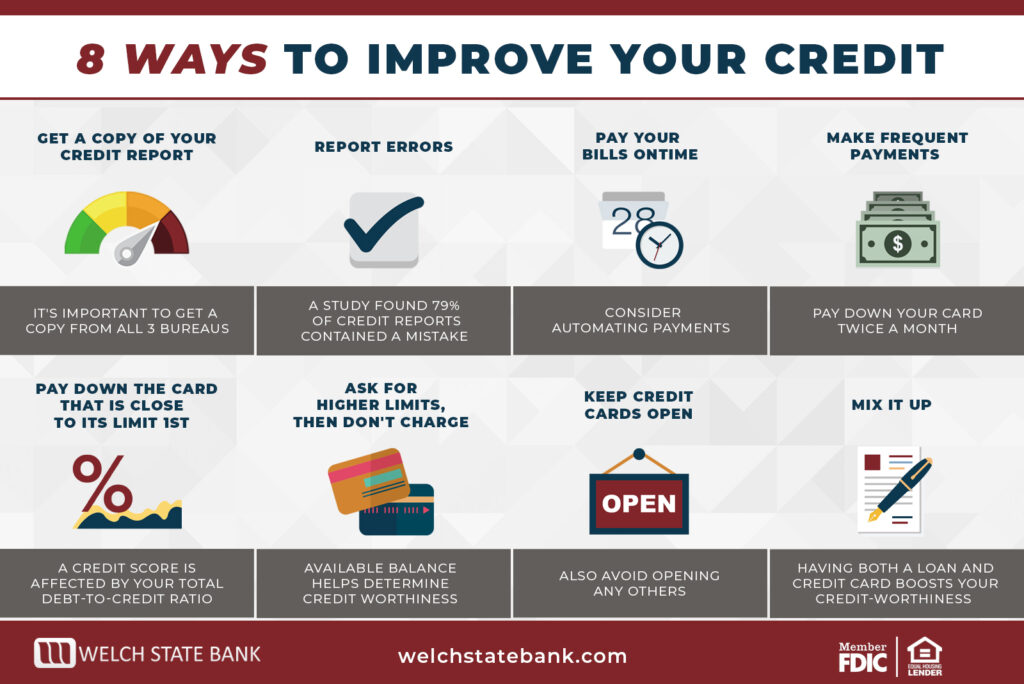
2. Pay Your Bills on Time, Every Time

Your fee records is the maximum sizeable component for your credit score. Even one past due fee can have a substantive impact. According to FICO, a single 30-day late price can drop your score by way of up to one hundred points.
Actionable Tips:
Set up computerized bills for as a minimum the minimum quantity due.
Use calendar reminders or budgeting apps to music due dates.
If you’ve ignored payments, capture up as quickly as feasible and call your lender to explain the state of affairs.
3. Lower Your Credit Utilization Ratio
Credit utilization measures how a great deal of your available credit you’re the usage of. Experts advise preserving this ratio under 30%, however ideally below 10% for the quality outcomes.
For instance, when you have a credit card with a 10,000 limit, try to keep your balance be low 10,000 limit, try to keep your balance be low 3,000 (30%) or $1,000 (10%).
Actionable Tips:
Pay down current balances as quickly as viable.
Request a credit score restriction increase (without increasing spending).
Spread out charges throughout multiple cards to maintain person utilization low.
4. Avoid Closing Old Credit Accounts
The duration of your credit history subjects. Closing old bills can shorten your common credit records and reduce your overall to be had credit score, which might also harm your score.
Actionable Tips:
Keep old bills open, even if you don’t use them regularly.
Use vintage cards once in a while for small purchases to keep them lively.
5. Limit Hard Inquiries
When you observe for brand new credit score, lenders carry out a hard inquiry, which could briefly decrease your rating by means of some factors. Multiple difficult inquiries in a quick period can signal financial misery.
Actionable Tips:
Only follow for credit whilst surely essential.
Rate-save for loans (e.g., mortgages, automobile loans) within a brief window (14–45 days) to decrease the impact.
6. Diversify Your Credit Mix
Having a mixture of credit score sorts—such as credit playing cards, installment loans, and mortgages—can positively impact your rating. It shows lenders you could manage one-of-a-kind forms of credit responsibly.
Actionable Tips:
If you only have credit playing cards, don’t forget a small private loan or car mortgage (if needed).
Avoid taking over new debt just to enhance your credit mix.
7. Monitor Your Credit Report Regularly
Errors in your credit score report can drag down your score. A 2021 have a look at by the Federal Trade Commission (FTC) found that 1 in five consumers had an error on their credit report.
Actionable Tips:
Request unfastened credit score reports from AnnualCreditReport.Com (you’re entitled to 1 free report from each bureau yearly).
Dispute any inaccuracies with the credit score bureaus (Equifax, Experian, TransUnion).
8. Consider Credit-Building Tools
If you’re starting from scratch or rebuilding your credit, these equipment can assist:
Secured Credit Cards: Require a cash deposit as collateral, making them less complicated to qualify for.
Credit-Builder Loans: Designed to help you establish credit score through making small, viable payments.
Authorized User Status: Being delivered to a person else’s credit card (with proper price records) can improve your rating.
How Long Does It Take to Improve Your Credit Score?
The time it takes to improve your credit score relies upon for your place to begin and the steps you take.
Here’s a well known timeline:
Late Payments: 7 years (however their effect lessens over the years).
High Credit Utilization: A few months (if you pay down balances).
Hard Inquiries: 2 years (although their effect fades after a few months).
Bankruptcy: 7–10 years.
Consistency is fundamental. Small, positive moves over the years can cause widespread improvements.
Conclusion: Take Control of Your Credit Score Today
Improving your credit score rating is a adventure, not a dash. By understanding the factors that impact your score and taking regular, proactive steps, you can build a stronger monetary foundation. From paying payments on time to monitoring your credit file, every movement counts.
Ready to take the next step?
Start through checking your credit file and identifying regions for development. Share this guide with pals or family who may gain, and leave a comment beneath together with your credit rating journey or questions. Together, we are able to acquire monetary health and release brighter opportunities!
CTA: Have you successfully stepped forward your credit score score? Share your recommendations and studies inside the comments under! Don’t forget about to enroll in our e-newsletter for greater financial insights and hints.
FAQs About Improving Your Credit Score
1. Can I improve my credit score score speedy?
While some moves (like paying down balances) can yield quick results, full-size enhancements generally take months or years of regular attempt.
2. Will checking my credit score lower it?
No, checking your personal credit score is a soft inquiry and doesn’t have an effect on your rating.
3. How often ought to I take a look at my credit score record?
At least once a year, but greater frequently in case you’re actively working to improve your rating or suspect errors.
4. Can I eliminate bad objects from my credit score document?
Legitimate bad objects (like late bills) can’t be eliminated, but you may dispute inaccuracies.
5. Does paying off collections help my rating?
Paying off collections can assist, but the account may additionally nevertheless continue to be in your document for up to 7 years.